

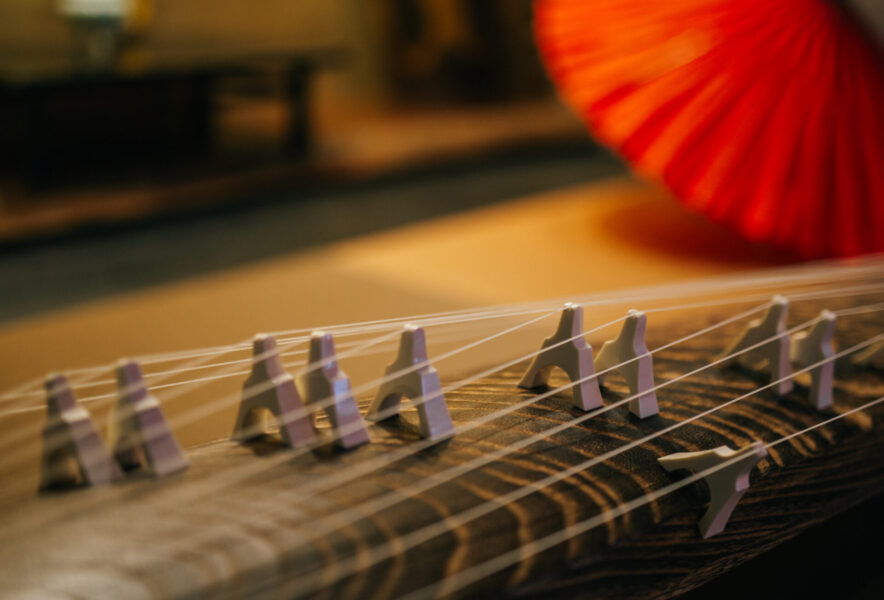
When you think of traditional Japanese musical instruments, what comes to mind? While many might picture the shakuhachi or shamisen, the koto is a graceful instrument whose elegant sound captivates many.
The koto is a familiar instrument in Japan, often seen in school classes and on television. But do you think all kotos are the same? In fact, the world of the koto is profound, with many varieties depending on the number of strings, its history, and its purpose.
In this article, we will delve into the little-known world of the koto and explore its diverse charm. By the time you finish reading, you’ll surely want to listen to its sound even more.
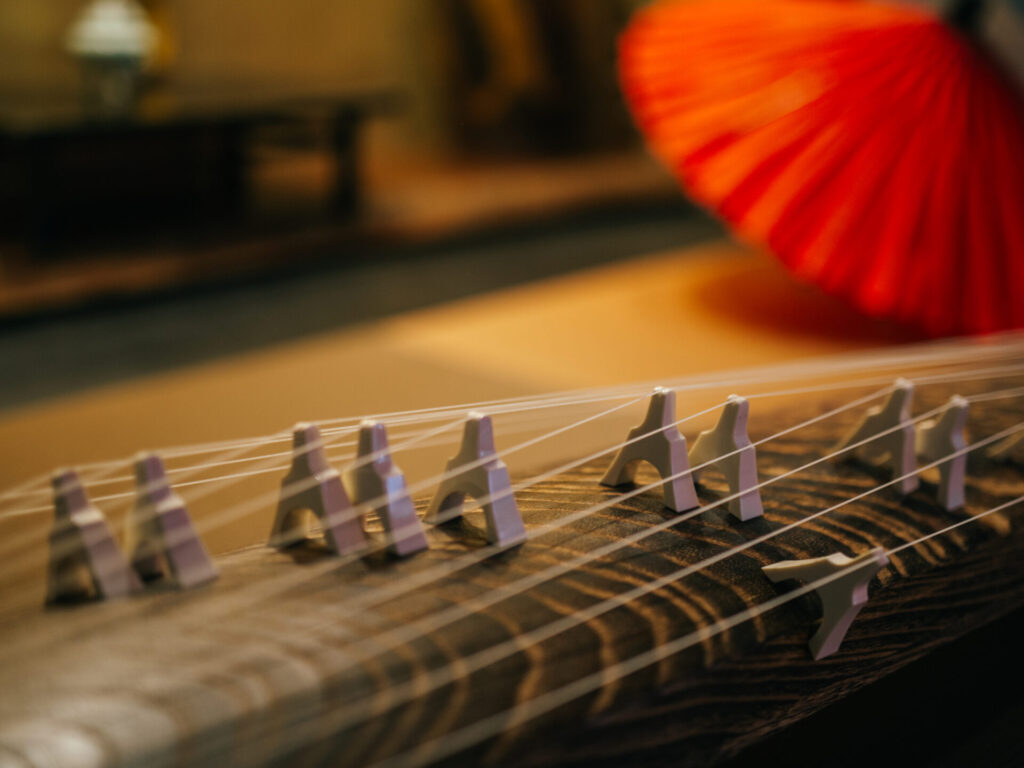
What Exactly Is a Koto?
The koto is a stringed instrument where sound is produced by plucking the strings stretched across the body with “tsume,” or picks, worn on the fingers. It is often confused with the “kin,” but a key difference is that the kin lacks movable bridges, whereas the koto uses movable bridges to adjust the pitch.
The history of the koto is long, believed to have been introduced from China during the Nara period. It was used in gagaku, the traditional court music, and became a popular pastime among aristocrats in the Heian period. Since then, it has evolved in various forms and is now played in a wide range of musical genres, including classical, pop, and jazz.

A World of Surprising Variety: Different Koto Types
There are many types of kotos, and here are a few of the most representative ones.
Koto Types That Have Evolved with History
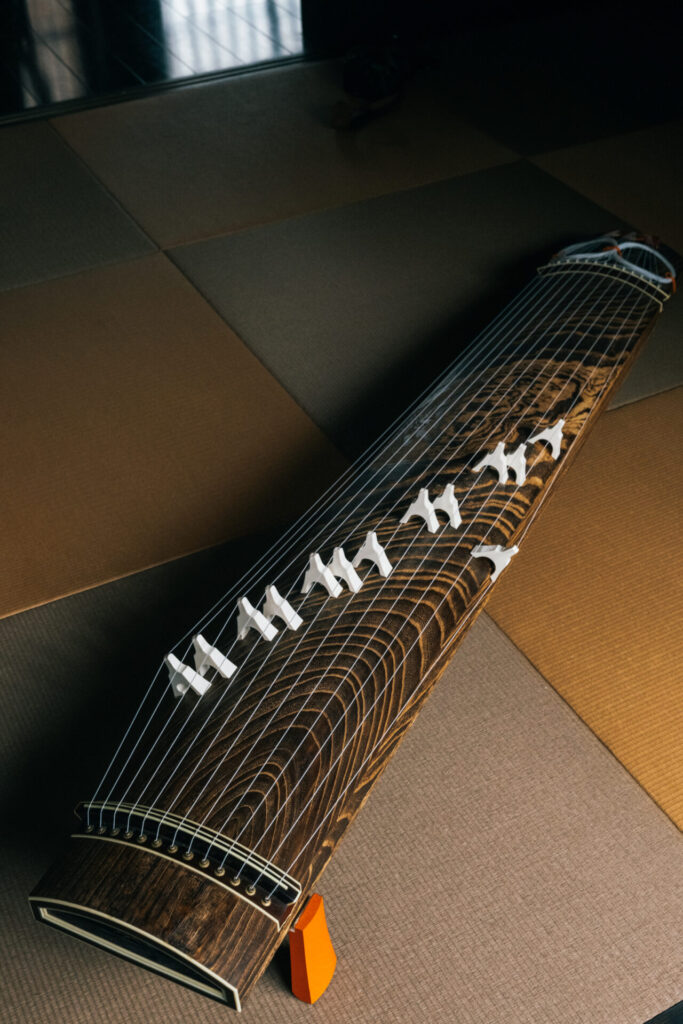
- Gagaku Koto: This is an older style of koto introduced during the Nara period. It is still used today in gagaku performances by musicians of the Imperial Household Agency. Its sound is elegant and creates a solemn atmosphere.
- Chikushi Koto: A type of koto that branched off from the gagaku koto and developed during the Edo period. It became the foundation for the 13-string koto and is the most common style today.
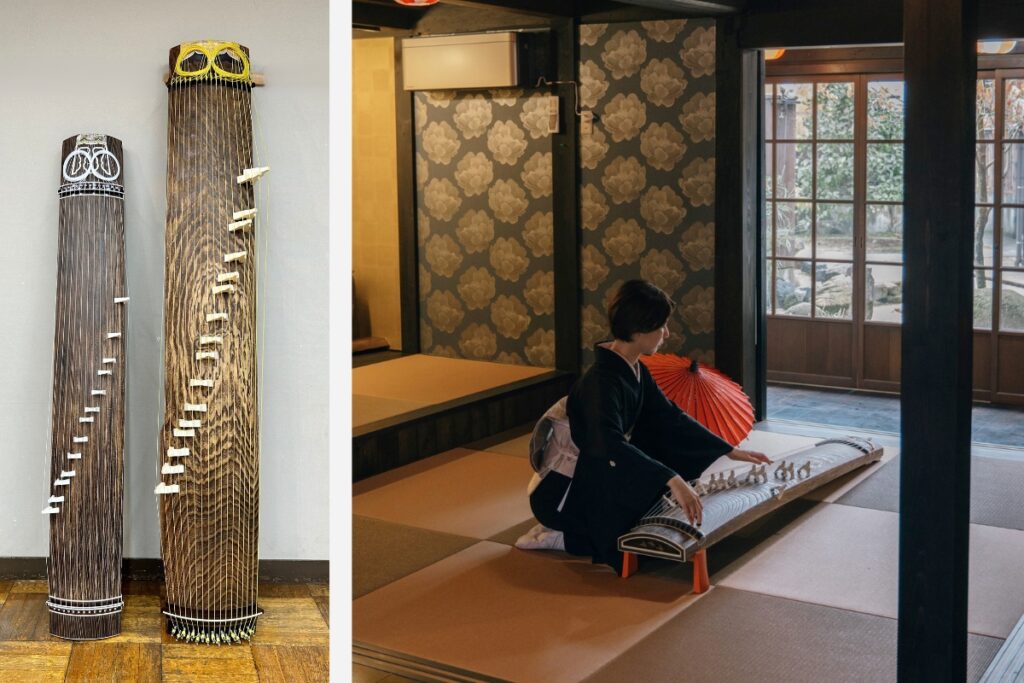
The Sound Changes with the Number of Strings!
- 13-String Koto: This is the most common type of koto, and most of the kotos you see are this kind. Characterized by its rich sound and expressive power, it is used for many classical and modern pieces.
- 17-String Koto: Developed to produce low-pitched sounds. It has thicker strings than the 13-string koto and plays a crucial role in ensemble performances by supporting the lower register, much like a double bass in an orchestra.
- 20- and 25-String Kotos: These are modern kotos created to cover a wider range of notes. They allow for new musical expressions not possible with existing koto music, and composers of contemporary music are exploring their new possibilities.
Koto Types Based on Performance Scene
- Classical Koto: This type of koto is used to perform traditional Japanese classical music. It has a profound and calm sound that conveys a deep sense of Japanese history.
Modern Koto: An updated version of the koto designed for contemporary music. Its sound is brighter and clearer than the classical koto, making it easier to adapt to various genres.
How to Play the Koto and Its Charms
A Beginner’s Guide to Playing
To play the koto, you first attach a “tsume,” or pick, to your fingers. Made from materials like ivory or plastic, these picks are used to pluck or flick the strings to create various tones.
Another important component is the small support, the “ji” (bridge), that rests on the strings. By moving these bridges, you can change the length of the vibrating string and adjust the pitch. Because the position of the bridges determines the scale, they are often moved during a performance.
The Koto Plays the Heart of Japan
The greatest charm of the koto is its beautiful sound. From delicate and soft tones to powerful, resonating notes, it can express a wide range of emotions depending on the player. The lingering “shaan” sound after plucking a string is like ripples spreading across water, bringing a sense of peace to the listener.The koto is also deeply connected to Japanese culture. It appears in the Heian-era classic The Tale of Genji, where it adorned the elegant court life. Its sound conveys the charm of Japanese scenery, the passing of seasons, and human emotions, allowing listeners to connect with the very heart of Japan.
Why Not Explore the World of the Koto?
We’ve introduced you to the different types of kotos, how they are played, and their charm. Now you know that there’s more to the koto than just the 13-string type, including the 17-string and modern kotos.
The sound of the koto can be heard not only in concert halls but also easily on YouTube and Spotify. Try searching for different types of kotos, like “17-string koto,” to hear the unique sounds of each.
Take this opportunity to explore the world of the traditional Japanese koto and listen to its profound sound. You’re sure to discover something new.
Comment